Romania is the EU market that exporters consistently underestimate. It runs a merchandise trade deficit near US$37 billion on imports of roughly US$146 billion, which for an economy of its size is enormous. That gap is not a problem to be solved, it is demand that Romanian industry cannot supply domestically, and somebody is filling it every year.
The 30-second version
- Romania imports about US$146 billion of goods against roughly US$109 billion of exports.
- The merchandise trade deficit sits near US$37 billion, although it has been narrowing recently.
- Main suppliers are Germany, Italy, Hungary and France, with Türkiye and others significant outside the EU.
- Imports concentrate in machinery, vehicles, petroleum and gas, electrical equipment and pharmaceuticals.
- Constanța handles about 52% of Romania's import shipments, making it the single most important entry point in southeastern Europe.
The size of the gap
The trade balance is the headline fact about this market, and it is worth looking at directly rather than as a percentage.
Romania has a large and growing industrial base, particularly in automotive components, electronics assembly and agriculture, but it imports most of the machinery, intermediate goods and energy that base runs on. It also imports a rising share of consumer goods as incomes climb. Both flows favour foreign suppliers, and neither is likely to reverse this decade.
Who supplies Romania, and who could
Germany, Italy, Hungary and France dominate, which is what you would expect from EU single market geography and supply chain integration. Türkiye is the significant non-EU presence, and in some categories it is dominant: in cement, Turkish suppliers have held around three quarters of the Romanian market.
That Turkish position tells you something useful. Romania is close enough to the Black Sea and the eastern Mediterranean that suppliers from Türkiye, the Caucasus and the wider Middle East have a genuine freight advantage over northern European competitors, and Romanian buyers use it. For an exporter in that region, Romania is often the most accessible EU market there is, and far less contested than Germany or the Netherlands.
Every EU market is competitive. They are not all competitive with the same people. In Romania you are mostly competing with Central Europe and Türkiye, not with China.
Constanța is the whole logistics story
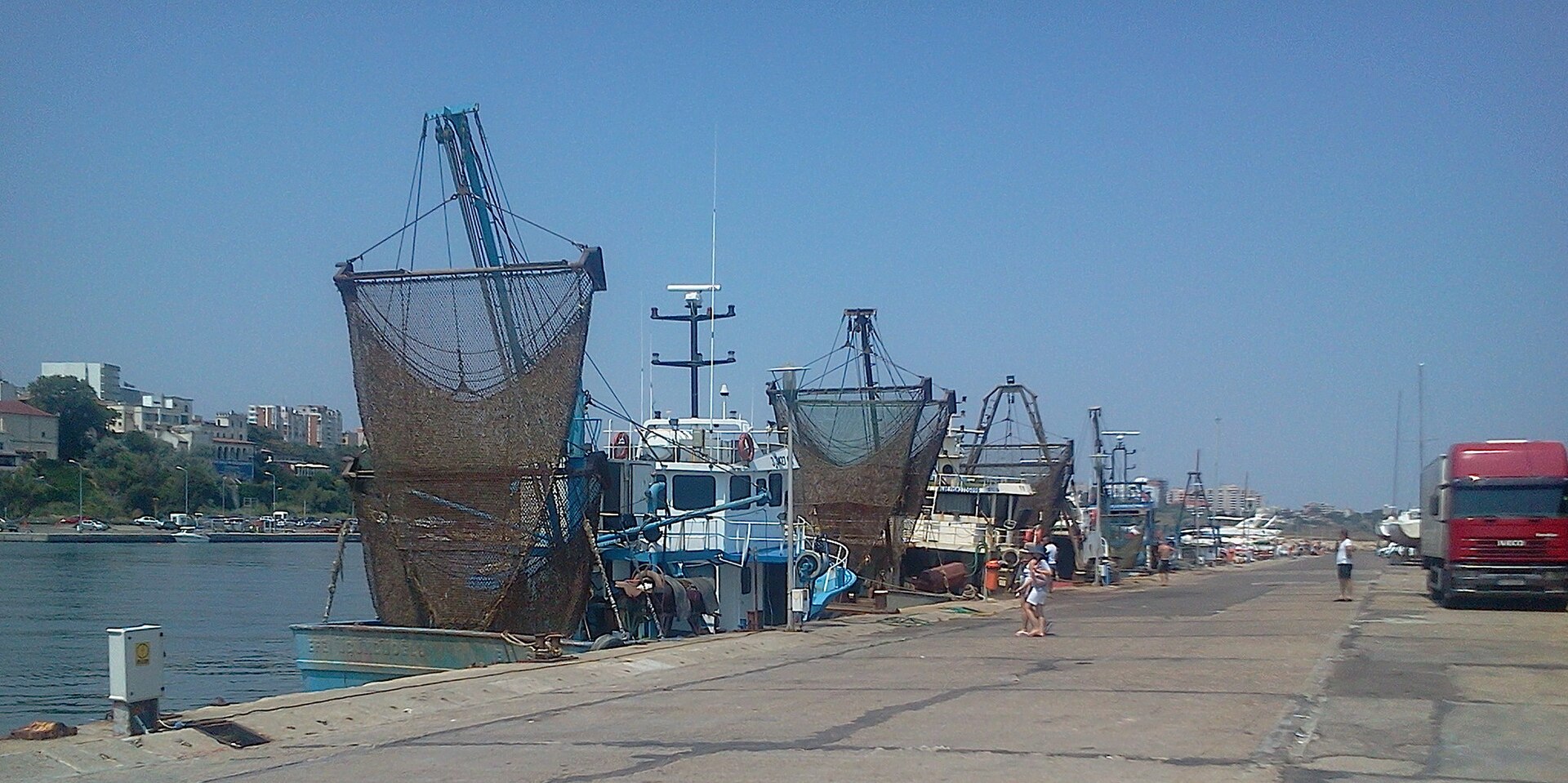
About 52% of Romania's import shipments come through Constanța, the largest port in southeastern Europe and an increasingly important gateway for Asian cargo heading into Central Europe. Bucharest accounts for roughly a further 24%, mostly air freight and inland clearance.
Two implications. First, if you sell into Romania, your freight planning and your competitor's freight planning both run through the same place, so cost differences come from routing and consolidation rather than from port choice. Second, Constanța's growth as a Black Sea gateway means volume landing there is increasingly destined for Hungary, Serbia, Bulgaria and Moldova rather than Romania itself. Read importer records with that in mind.
What Romanian buyers want
Three characteristics show up repeatedly:
- Price sensitivity with EU compliance. Romanian buyers are genuinely cost-driven, but the goods still have to meet EU conformity requirements. Cheap and non-compliant loses to slightly more expensive and documented, every time.
- Smaller order sizes than Western Europe. Many buyers are mid-size distributors rather than large chains, which means lower minimums and a faster decision, but also less volume per account.
- Relationship persistence. Once a Romanian buyer settles on a supplier who performs, they stay. Entry is harder than retention here, which rewards patience.
Where the 2026 opportunity sits
Three openings. Construction and infrastructure materials, driven by EU-funded projects that continue regardless of the economic cycle, which makes cement, steel, fittings and equipment a durable demand base. Automotive and electronics components, feeding assembly plants that keep expanding. And consumer goods, where rising incomes are pulling in categories that barely existed as imports five years ago.
The CBAM effect is worth watching specifically, because Romania imports carbon-intensive goods heavily and its dominant non-EU supplier for cement now carries a carbon cost. Suppliers with verified low emissions data have a direct opening. Our cement and clinker guide covers that mechanism, and the Polish import guide covers the neighbouring market that competes for the same regional volume.
How to actually enter: distributor, agent or direct
Romania rewards the right entry structure more than most EU markets, because the buyer base is fragmented and relationships travel slowly.
- Exclusive distributor. Fastest route to coverage and the default for consumer and building products. The risk is picking one that sits on the territory without developing it, so tie exclusivity to volume commitments with a review date.
- Commission agent. Works well for industrial and capital equipment where the sale is technical and the buyer wants a direct relationship with the manufacturer. Cheaper to start, slower to scale.
- Direct supply. Viable for large accounts, particularly in automotive components and energy, where the buyer has its own import function and prefers no intermediary margin.
Whichever you choose, verify the counterparty properly. Romania's company registry is public and a VAT number can be validated through the EU system in seconds, and both checks are worth doing before the first order rather than after the first unpaid invoice.
How ShipScout helps
Aggregate trade statistics tell you Romania runs a $37 billion deficit. They do not name one importer. ShipScout does, with 11B+ shipment records across 240+ countries:
- Find Romanian importers by HS code, ranked by shipped volume, with ports and cadence.
- Separate onward regional distribution from domestic demand, which matters a lot at Constanța.
- See which origins each buyer uses and spot the ones adding a supplier.
- Pull decision-maker contacts where available and open with the buyer's own import record.
Start a free trial and pull the Romanian buyer list for your product.
See who’s importing into Romania right now.
ShipScout turns 11B+ shipment records across 240+ countries into a live list of verified buyers and suppliers, ranked by volume, with the contacts to reach them. Create a free account and run your first search in minutes.
Start your free trial →