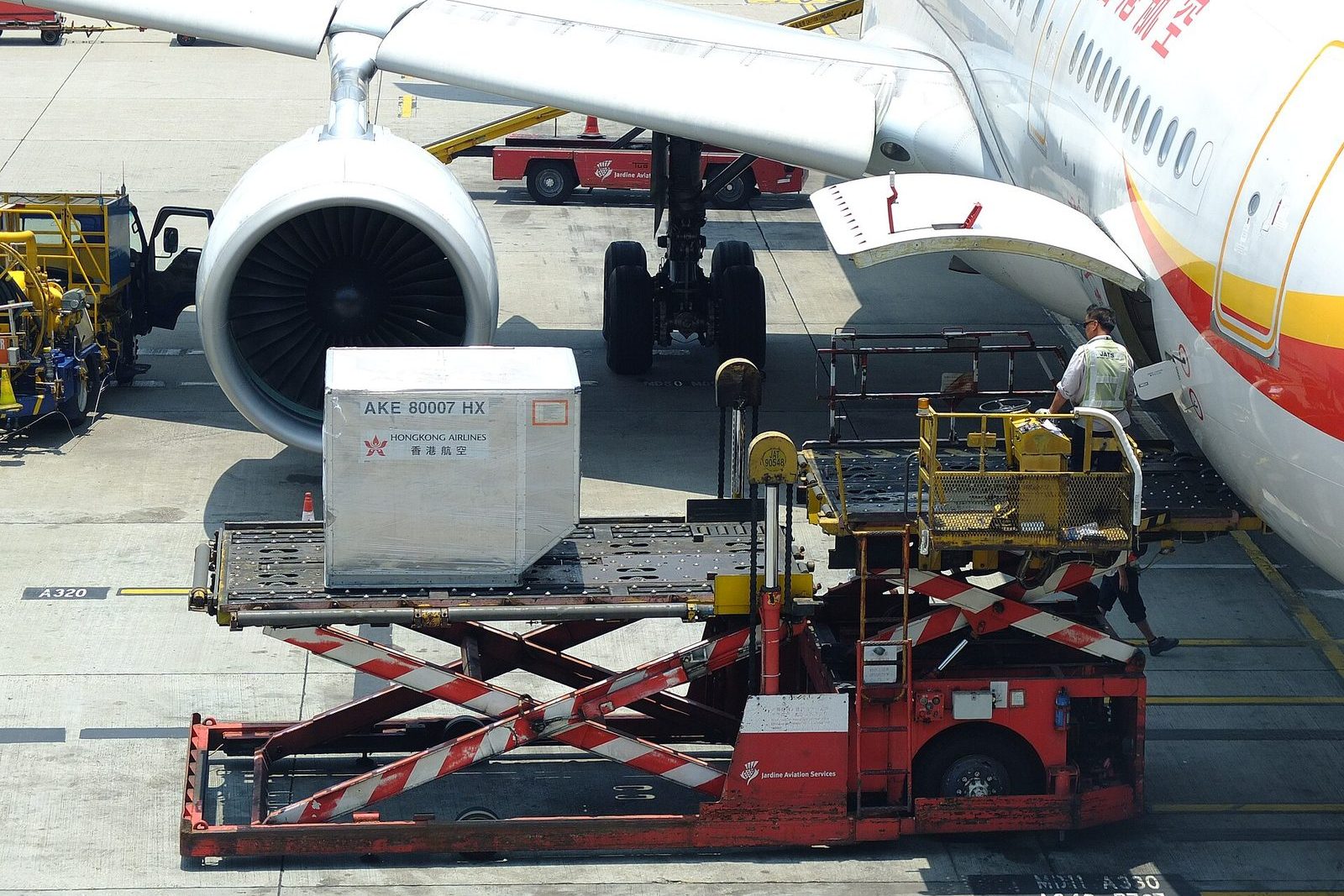
Egypt is the one market in North Africa where the paperwork genuinely decides whether you get paid. Since 1 January 2026 air freight joined sea freight under the Advance Cargo Information regime, which means no shipment reaches an Egyptian buyer without an ACID number issued before the goods leave your country. Exporters who treat that as a formality discover it at the airport. This guide covers the ACI process, what Egypt import data shows about who is buying what, and how to shortlist Egyptian importers who can actually pay and clear.
The 30-second version
- ACI is mandatory for air freight from 1 January 2026, having applied to sea freight since 2021.
- The Egyptian importer raises the ACID on Nafeza. The exporter uploads documents on CargoX. Both sides must act before shipping.
- The 19-digit ACID number must appear on the commercial invoice, certificate of origin and transport documents.
- No ACID means cargo held, retroactive registration, and storage and demurrage running the whole time.
- China supplies 16.4% of Egypt's imports, ahead of Saudi Arabia at 7.2% and the United States at 5.9%.
What is an ACID number and who gets it?
The ACID is a 19-digit identifier tying one shipment to one importer and one exporter before the goods move. It sits at the centre of two connected platforms: Nafeza, the Egyptian national single window used by the importer, and CargoX, the blockchain document platform used by the foreign exporter.
The sequence matters and cannot be run out of order:
- Exporter sends a proforma invoice to the Egyptian buyer.
- Importer registers the shipment on Nafeza and requests an ACID against that proforma.
- Egyptian customs review and, once approved, issue the 19-digit ACID to both parties as provisional authorisation.
- Exporter uploads the commercial invoice, packing list, certificate of origin and transport documents through CargoX, each carrying the ACID.
- Goods ship. Documents are already in the hands of customs before arrival.
The design intent is that clearance is largely decided before the vessel or aircraft lands. When it works, release is fast. When the ACID is missing, nothing about the shipment can be fixed at the border by a good agent.
The ACID is issued to a specific importer against a specific proforma. Change the buyer after the fact and you are not amending a document, you are starting again.
What goes wrong with ACI in practice?
Four failures account for most held cargo:
- ACID requested too late. Approval is not instant, and the goods cannot ship before it lands.
- ACID missing from a document. It has to be on the invoice, the certificate of origin and the transport document, not just quoted in an email.
- Mismatch against the proforma. Quantities, values, HS codes and party names must line up with what the ACID was issued against.
- Assuming the buyer handled it. The importer raises the ACID, but the exporter carries the upload obligation. Both halves are required.
Build the ACID step into your order confirmation process. The moment a proforma is issued, someone should be chasing the number, because it gates the shipping date rather than following it.
What does Egypt import?
The import bill is dominated by energy and capital goods. Mineral fuels, oils and distillation products account for 18.0% at around $16.99bn, and machinery and nuclear reactors 7.6% at around $7.18bn. Cereals sit alongside them as a structural requirement rather than a discretionary purchase, which is why Egypt shows up as one of the world's largest wheat buyers year after year.
Supplier concentration is lower than in the Gulf. China leads at 16.4%, but Saudi Arabia at 7.2%, the United States at 5.9%, Russia at 3.8% and Germany at 3.6% show a market that spreads its sourcing. For an exporter that is encouraging: no single origin dominates the way China dominates Saudi imports, and buyers are used to evaluating new suppliers.
How do you find Egyptian importers?
Three practical screens, in order:
- Do they import your HS code regularly? Frequency separates distributors from traders, and in a market with foreign-currency constraints, regular importers are the ones with reliable access to hard currency.
- Which origins do they already buy from? A buyer already sourcing from Europe understands European documentation and pricing. One buying only from China may be a price-led operation.
- Are volumes stable or falling? Egypt's import mix has moved sharply with currency availability. A buyer whose volumes collapsed is telling you something about their financing.
Payment terms deserve extra attention here. Letters of credit remain common precisely because currency access has been uneven, and an Egyptian buyer pushing hard for open account terms on a first order is asking you to carry a risk their own bank is pricing.
Where the opportunity sits
Egypt is a manufacturing base as much as a consumer market. Industrial inputs, packaging, components, chemicals and machinery all feed domestic production that then exports into Africa and Europe. Selling into Egypt is often selling into somebody else's supply chain, which makes the buyer's own export activity a useful signal. An Egyptian manufacturer whose exports are growing is a buyer whose input demand is growing with it.
How ShipScout helps
ACI tells you how to ship. It says nothing about who to ship to. ShipScout covers that with 11B+ shipment records across 240+ countries:
- Search your HS code into Egypt and see every importer receiving it, with volume, frequency and trend.
- Check their current suppliers and origins so you know the price point you are competing against before you quote.
- Look at the buyer's own exports to judge whether their input demand is expanding.
- Pull decision-maker contacts where available and open with their trade record. For the wider region, see SABER certification for Saudi Arabia and the UAE CEPA network.
Get the ACID right, then point it at a buyer who imports your product every month. Start a free trial and pull the Egyptian importers for your category.
See who’s importing Egypt import market right now.
ShipScout turns 11B+ shipment records across 240+ countries into a live list of verified buyers and suppliers, ranked by volume, with the contacts to reach them. Create a free account and run your first search in minutes.
Start your free trial →