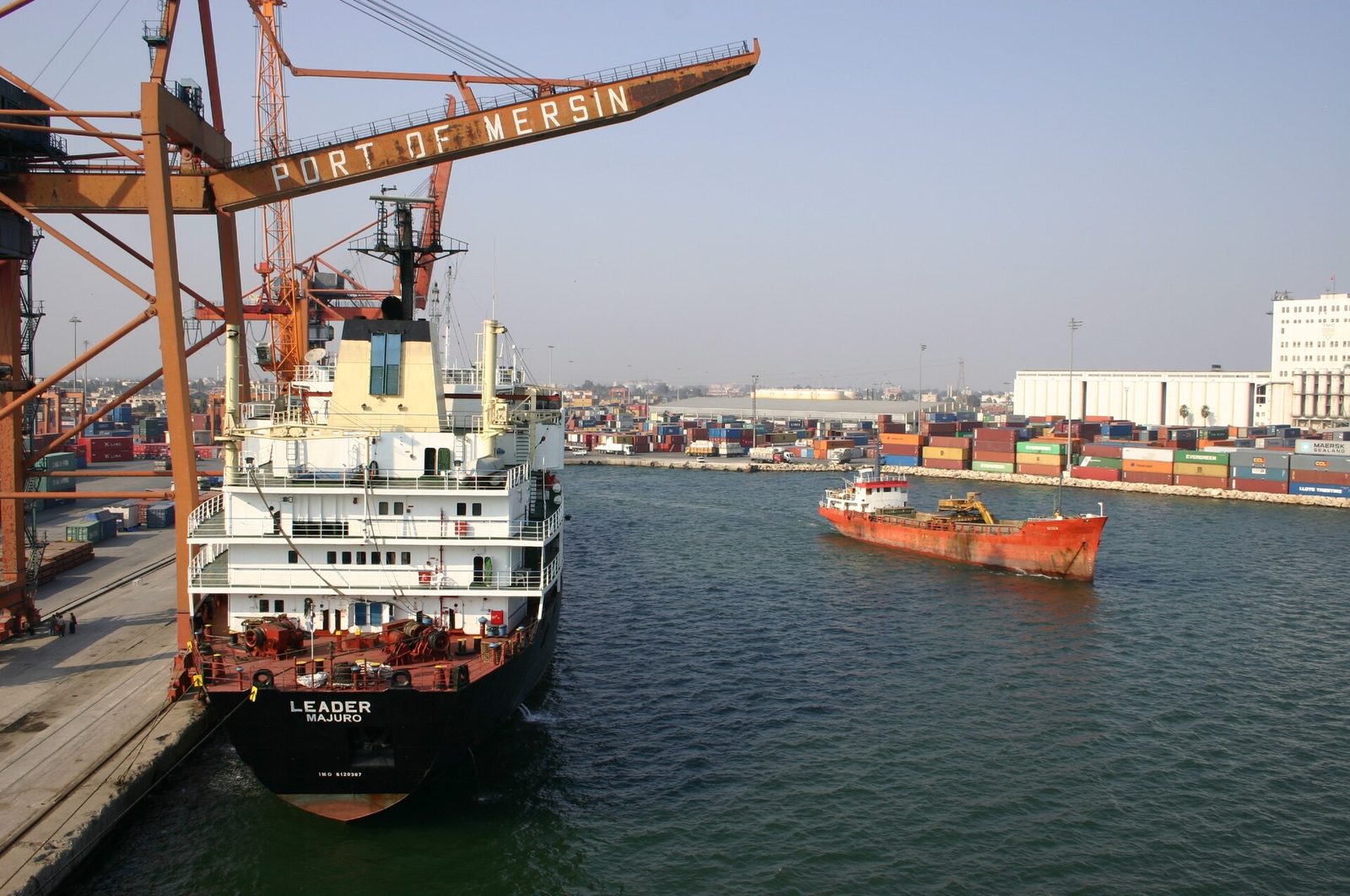
Two identical machines land at Mersin on the same day. One clears at zero duty, the other pays several thousand euros. The difference is a single sheet of paper. That is Turkey customs duty in practice: the rate is driven less by what the goods are than by which origin they carry and whether the right certificate travelled with them. Türkiye has been in a customs union with the EU since 1996, and the paperwork that unlocks it, the A.TR movement certificate, is the most valuable document in the file.
The 30-second version
- Industrial goods in free circulation in the EU enter Türkiye duty free, but only with a valid A.TR certificate.
- The A.TR does not cover agricultural products, coal or steel. Those sit outside the customs union and need their own treatment.
- Additional customs duty can apply to certain goods even when an A.TR is presented, which surprises EU shippers.
- Türkiye imported $365.41bn in 2025, up 6.2%, running a record trade deficit of around $92bn.
- Three of the six largest suppliers are EU or EFTA countries, so origin paperwork decides the duty on a large share of inbound trade.
How does the EU-Türkiye customs union work?
The customs union took effect on 1 January 1996 and removed customs duties on industrial goods moving between the parties. The mechanism is unusual: it turns on free circulation rather than origin. Goods manufactured in China but already customs-cleared into the EU can move to Türkiye under an A.TR at zero duty, because what the certificate attests is that duty has already been paid somewhere in the union.
That is a genuinely different concept from a free trade agreement certificate of origin, and confusing the two is the most common error EU exporters make. An A.TR says "this was in free circulation in the customs union". A EUR.1 says "this originated in a specific country". Different documents, different tests, different goods.
| A.TR | EUR.1 | |
|---|---|---|
| Proves | Free circulation | Preferential origin |
| Covers industrial goods | ✓ | ✓ |
| Covers agriculture, coal, steel | — | ✓ where the agreement allows |
| Requires substantial transformation | — | ✓ |
| Used from EFTA states | — | ✓ |
What duties and taxes apply to imports into Türkiye?
Four separate charges can land on one entry, and importers who budget only for the first are the ones who get surprised:
- Customs duty, aligned with the EU common external tariff for industrial goods, which averages roughly 3.5% to 6.5% depending on category. Zero with a valid A.TR.
- Additional customs duty, applied to selected product groups and origins on top of the base rate. It can apply even where an A.TR is presented, and it is the single most overlooked line in a Turkish landed-cost calculation.
- Value added tax, charged on customs value plus duty, like most VAT regimes.
- Special consumption tax on specific categories such as vehicles, fuels, alcohol and tobacco, which can dwarf every other charge.
There is also a surveillance mechanism that sets reference values for certain imports. Where a declared value falls below the reference, the importer is pushed toward a higher assessed value or a different clearance route. Practitioners call it gözetim, and a supplier quoting an unusually low unit price into Türkiye should trigger the question of whether it clears at that value at all.
Under-invoicing to reduce duty in a market with reference values does not reduce duty. It converts a customs question into an investigation.
Who supplies Türkiye?
China led in Q1 2026 at $13.17bn, ahead of Russia at $9.09bn and Germany at $6.62bn, with the United States, Switzerland and Italy following. Full-year 2025 imports were $365.41bn against a record deficit near $92bn. The import basket is energy and raw material heavy: crude petroleum was the largest single line in Q1 2026 at $9.82bn, unwrought gold $5.60bn and passenger cars $4.19bn.
Read the supplier list through the paperwork lens and it becomes a strategy. Germany and Italy ship under the customs union with A.TR. Switzerland ships under the Türkiye-EFTA agreement with EUR.1. China and Russia ship at full MFN rates plus any additional duty. A European supplier competing against a Chinese one into Türkiye starts with a structural cost advantage of several percentage points, and quite a few of them do not price as though they know it.
What should an exporter to Türkiye check first?
- Is your product inside the customs union? Industrial yes, agricultural, coal and steel no.
- Are the goods in free circulation in the EU? That, not manufacturing origin, is what an A.TR needs.
- Does additional customs duty apply to your code and origin? Check before quoting, not after.
- Is there a reference value for your product, and does your price sit above it?
- Does the product need TAREKS or another conformity check before release?
How ShipScout helps
Duty structure is public. What is not public is which Turkish companies buy your product and who supplies them now. ShipScout answers that with 11B+ shipment records across 240+ countries:
- Search your HS code into Türkiye and see every importer, ranked by volume and shipment frequency.
- See their current origins, which tells you whether they are buying under the customs union or paying full rates, and therefore what a European supplier can undercut.
- Track volume trends across 2024 to 2026 to separate growing buyers from ones winding down.
- Pull decision-maker contacts where available and open with their own import record. See also EU import data by HS code and the EORI number guide.
Get the certificate right and the duty goes to zero. Get the buyer right and it matters. Start a free trial and pull the Turkish importers for your product.
See who’s importing Türkiye import duty right now.
ShipScout turns 11B+ shipment records across 240+ countries into a live list of verified buyers and suppliers, ranked by volume, with the contacts to reach them. Create a free account and run your first search in minutes.
Start your free trial →