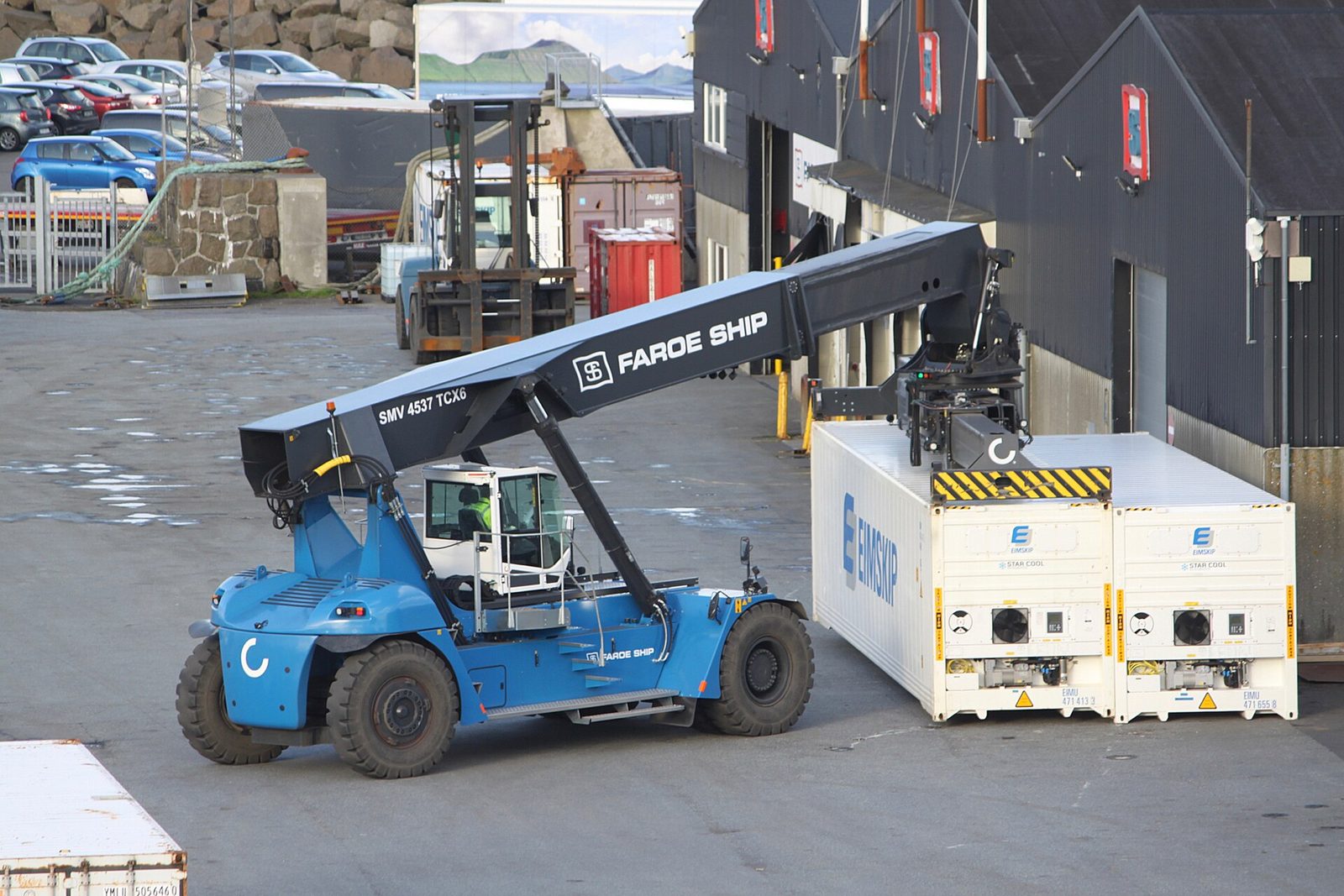
The UAE buys more than 85% of its food from abroad. That is not a temporary condition or a policy failure, it is geography, and it makes the Emirates one of the few markets on earth where a food exporter is selling into structural demand rather than fighting a domestic industry. UAE food imports ran to roughly $23 billion in 2023, with consumer-oriented products alone at $13.6 billion. The barrier to entry is not demand. It is a registration and labelling regime that rejects perfectly good product on paperwork.
The 30-second version
- Over 85% of food consumed in the UAE is imported. Total food imports were around $23bn in 2023.
- Every food product sold in Dubai must be registered and label-assessed through Foodwatch, now integrated with the federal ZAD platform.
- Arabic labelling is mandatory, and bilingual labels must say exactly the same thing in both languages.
- Labelling breaches carry fines from AED 10,000 to AED 100,000.
- Halal certification is required for meat and poultry and expected across most of the category. Annual halal food imports run near $20bn.
What does the UAE import, and from where?
Consumer-oriented product is the bulk of it, which is the segment with margin. Cereals were $1.61 billion in 2023, up from $1.19 billion in 2021, with India supplying 40.3% of that total and Australia 12.3%. Beef ran around $1.4 billion and poultry around $1.3 billion in 2024, sourced heavily from Brazil, the United States and Australia. Vegetable, fruit and nut preparations were $757 million in 2024.
Two things follow from that shape. First, the market is genuinely diversified by origin, so an incumbent supplier is rarely unassailable. Second, the categories are large enough that a 1% share is a real business. A supplier taking 1% of UAE cereal imports is shipping $16 million a year.
What certification do you need to export food to the UAE?
Four layers, and you need all of them before the first container moves:
- Halal certification from a body recognised by the UAE authorities, mandatory for meat and poultry and effectively expected across processed foods containing animal derivatives.
- Product registration on Foodwatch for Dubai, integrated with the federal ZAD platform for trading food goods.
- Label assessment, where the municipality checks your artwork against the guideline before the product can be listed.
- Health certificates and certificates of origin per consignment, issued in the exporting country.
The registration is per product, not per company. An exporter with forty SKUs registers forty times, and each one can fail independently on its label.
Why do food shipments get rejected in the UAE?
Labelling, overwhelmingly. Arabic content is mandatory. Where a label carries both English and Arabic, the two must be identical in content, and translators who "improve" a marketing claim in Arabic create a mismatch that fails assessment. Beyond that, the recurring causes are missing production or expiry dates in the accepted format, net weight declared inconsistently between the label and the invoice, ingredient lists that do not match the registered formulation, and remaining shelf life at entry falling short of the rule for that category. Check the shelf-life requirement for your product before you plan the sailing, because a slow route can consume the margin the rule allows.
Nobody rejects a container because the food is bad. They reject it because the Arabic says 340g and the English says 12oz, and 12oz is 340.19g.
How do you find UAE food importers?
The UAE food trade runs through distributors, and the distributor list is not public. What is visible is shipment activity, and that is the better signal anyway. A distributor already importing chilled beef from Australia has the cold chain, the halal paperwork discipline and the retail listings. A distributor who has never imported your category has none of those things and will take a year to build them.
Practical filters when you are shortlisting:
- Category adjacency. They should already handle something that ships and stores like your product.
- Shipment frequency. Monthly beats occasional. Occasional usually means opportunistic trading rather than distribution.
- Origin spread. A buyer sourcing from four countries is used to managing multiple certification regimes.
- Port and emirate. Jebel Ali serves re-export into Africa and South Asia. Abu Dhabi skews to domestic institutional supply.
The re-export angle
A meaningful share of what lands in the UAE leaves again. Re-exports accounted for roughly AED 44.7 billion of the UAE's H1 2026 trade with CEPA partners alone. For a food exporter that changes the arithmetic on a UAE distributor: you are not only buying access to nine million residents, you are buying a channel into East Africa, the wider Gulf and parts of South Asia through a partner who already runs those lanes. Pricing a UAE distributor purely on domestic consumption undervalues them. The wider agreement picture is in the UAE CEPA guide.
How ShipScout helps
Certification is solvable. Finding the right distributor is the hard part, and it is a data problem. ShipScout puts 11B+ shipment records across 240+ countries behind it:
- Search your HS code into the UAE and see every importer receiving that product, ranked by volume and frequency.
- Check who currently supplies them, from where, and for how long, so you know whether you are entering an open lane or displacing an incumbent.
- Filter by port and emirate to separate domestic distributors from re-export traders.
- Pull decision-maker contacts where available and approach with their own import history. For the neighbouring market, see the SABER certificate guide.
The demand is structural and the buyer list is finite. Start a free trial and pull the importers for your category.
See who’s importing UAE food import market right now.
ShipScout turns 11B+ shipment records across 240+ countries into a live list of verified buyers and suppliers, ranked by volume, with the contacts to reach them. Create a free account and run your first search in minutes.
Start your free trial →