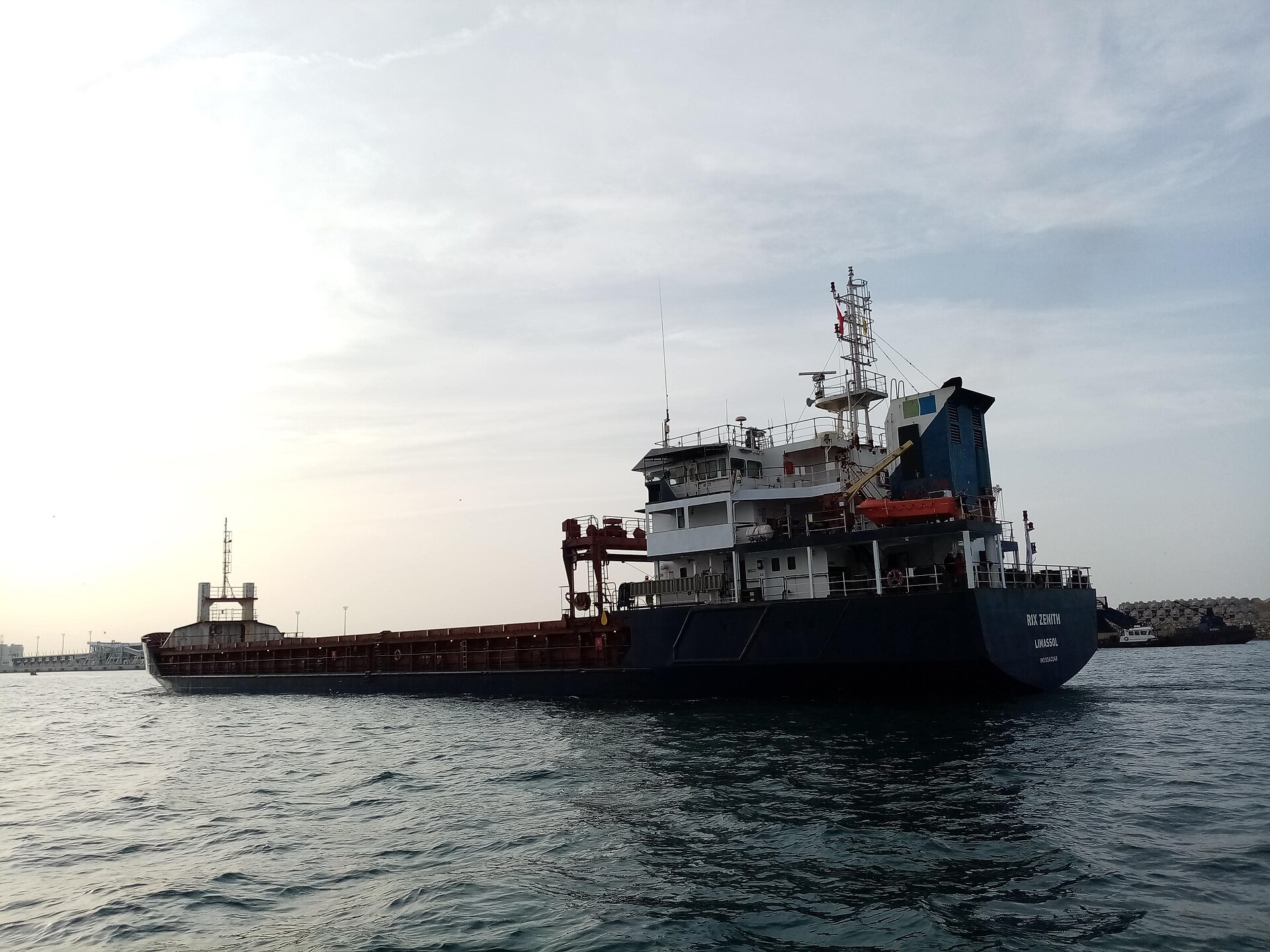
Morocco is the only African country that exports more cars than South Africa, and that single fact explains most of its import profile. This is not a consumer market that happens to import. It is an industrial platform that imports components, energy and raw material, assembles, and exports into Europe. Sell to it accordingly and it makes sense. Sell to it as a developing consumer market and you will misread everything.
The 30-second version
- Morocco imported about US$112 billion of goods in 2025.
- Top suppliers: Spain 14.7%, China 12.7%, France 9.9%, United States 9.1%, Germany 5.4%, Türkiye 5.1%.
- The import mix is industrial: petroleum products, vehicle parts (4.5%), passenger cars, insulated wire and cable (3.7%), sulphur and copper wire.
- Automotive exports reached MAD 157.6 billion, up 6.3%.
- Tanger Med handles over 9 million TEU and is the largest port in Africa and the Mediterranean.
A supplier table with no dominant player
The striking thing about Morocco's import mix is how evenly it is spread.
No supplier holds more than fifteen percent. Spain leads on geography, China on cost, France on history, and the United States on a free trade agreement that most exporters forget exists. Germany and Türkiye each hold roughly five percent. Compare that to markets where one country supplies a third of everything and the difference is obvious: in Morocco, nobody is entrenched enough to be unassailable.
The import list reads like a parts catalogue
Look at what Morocco actually buys and the industrial structure is unmistakable. Motor vehicle parts at 4.5% of imports, insulated electrical wire and cable at 3.7%, copper wire at 1.9%, spark-ignition engines at 1.7%, vehicle bodies and cabs at 1.5%. Add passenger cars at 3.8% and the automotive complex alone is a substantial share of the national import bill.
Sulphur at 2.9% is the other tell. Morocco holds the world's largest phosphate reserves and imports sulphur to process them into fertilizer, which it then exports. That is a large, steady, price-sensitive industrial import with a small number of very serious buyers, and it is one of the most under-approached opportunities in the country. Our fertilizer trade guide covers the downstream side of that business.
Morocco buys inputs, not finished goods. The buyer is a factory with a production schedule, not a distributor with a catalogue.
Tanger Med changes the calculation
Tanger Med processes over 9 million TEU, which puts it ahead of every other African and Mediterranean port. It sits on the Strait of Gibraltar with direct access to the main Asia-Europe trunk route, which means Morocco has better container connectivity than most of Europe.
The practical consequences are worth spelling out. Transit times from Asia are competitive with southern European ports. Transhipment volume is substantial, so a meaningful share of what lands there never enters Morocco. And the free zones around the port allow processing and re-export under favourable terms, which is exactly why the automotive and aerospace clusters located there. If you are reading Moroccan import records, separating free zone activity from domestic clearance is the first analytical step.
The agreements that actually matter
Morocco has an Association Agreement with the EU giving largely duty-free access for industrial goods, a free trade agreement with the United States, and the Agadir Agreement linking it with Egypt, Jordan and Tunisia. It is also part of the African Continental Free Trade Area.
For an exporter, the important question is not which agreements exist but which one your goods qualify under, and whether the rules of origin let you use it. A component that is assembled in Morocco and exported to the EU carries origin implications that determine the whole economics of the deal. Getting that wrong is the most expensive mistake in this market.
Where the 2026 opportunity sits
Automotive and aerospace components remain the largest and most reliable opening, because the assembly base keeps expanding and it cannot source locally at the required specification. Electrical wire, cable and connectors are a specific and sizeable line worth targeting directly. Fertilizer inputs, particularly sulphur and ammonia, serve a small number of very large buyers. And renewable energy equipment is growing fast as Morocco builds out solar and wind capacity at scale.
For Gulf and Turkish exporters especially, Morocco is under-served relative to its size, and the freight is manageable. Spanish import flows are worth reading alongside this, since the two economies are closely coupled and many supply chains run through both.
Free zones change your landed cost, and your paperwork
A large share of Moroccan industrial activity sits inside industrial acceleration zones, particularly around Tangier and Kenitra. Goods entering those zones are not in free circulation in Morocco. They are suspended from duty and VAT while inside, and the position only resolves when they leave, either into the domestic market or for export.
That has three practical consequences for a supplier. First, a zone customer's buying decision is driven by their export economics rather than by Moroccan domestic pricing, so arguments about local market conditions do not land. Second, your documentation requirements differ: a zone entry is not a standard import clearance and your paperwork has to match the regime your customer is operating under. Third, goods that enter a zone, get assembled and then move to the EU carry origin consequences determined by the transformation performed, which affects whether your customer can use the EU Association Agreement at all.
Ask which regime your buyer operates under before quoting. It changes the answer.
How ShipScout helps
National statistics tell you vehicle parts are 4.5% of Moroccan imports. They do not name the plant buying them. ShipScout does, with 11B+ shipment records across 240+ countries:
- Find Moroccan importers by HS code, ranked by volume, with ports and buying cadence.
- Separate free zone and transhipment activity from genuine domestic demand.
- See each buyer's origin mix and identify who is actively adding suppliers.
- Pull decision-maker contacts where available and lead with the buyer's own trade record.
Start a free trial and pull the Moroccan buyer list for your product.
See who’s importing into Morocco right now.
ShipScout turns 11B+ shipment records across 240+ countries into a live list of verified buyers and suppliers, ranked by volume, with the contacts to reach them. Create a free account and run your first search in minutes.
Start your free trial →