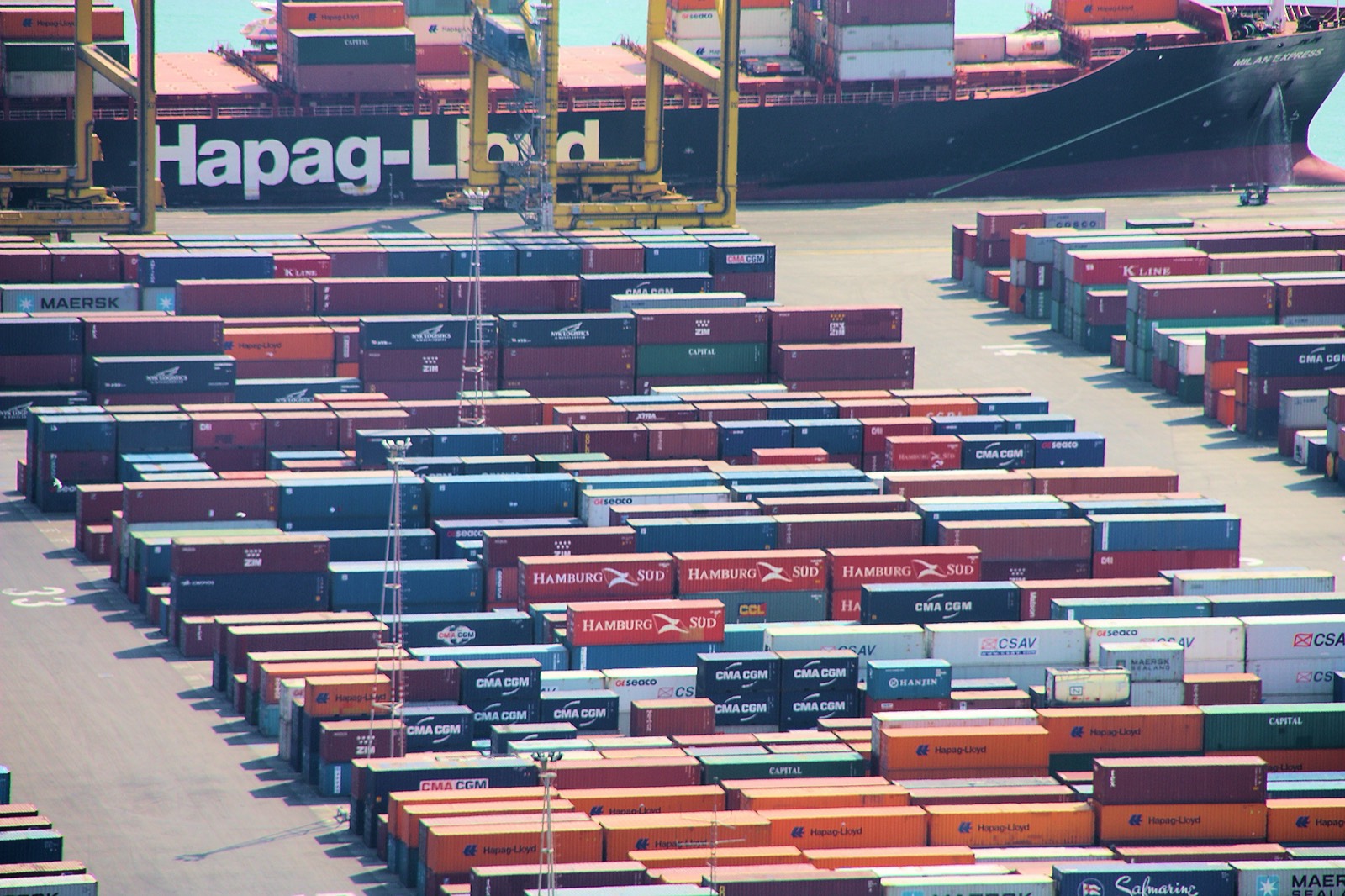
Something happened in Spain in early 2026 that did not happen in any other large EU economy: China overtook Germany as the country's biggest supplier of goods. Chinese product accounted for about 11.6% of Spanish imports over the first four months against Germany's 11.4%. That is a narrow margin, but the direction is what matters. Spanish buyers are re-sourcing, and a market that is re-sourcing is a market where a new supplier can get in.
The 30-second version
- Spain imported €274.6 billion of goods in the first seven months of 2026, up 5.3%.
- The trade deficit passed €38 billion, because imports are growing at roughly twice the rate of exports.
- China overtook Germany as the largest supplier, 11.6% against 11.4% of total imports.
- Chinese supply grew 11.2%, German 10.4%, French 8.3%.
- The top ten suppliers account for just under 60% of import value, so forty percent is spread thin and contestable.
Who supplies Spain
The supplier table is tight at the top and fragmented below it.
Five countries, each within shouting distance of the others, cover roughly half the import bill. What that hides is the tail: over forty percent of Spanish imports come from outside the top ten, which is a larger contestable share than you find in Germany or France. Spain is genuinely a market where a mid-size exporter from Türkiye, India, Morocco or the Gulf can build a position without displacing a national champion.
What Spain actually buys
The import mix is heavily industrial and energy-weighted:
- Crude petroleum, around $60.3 billion and close to 11.8% of imports. Spain has almost no domestic production.
- Vehicles, about $56.4 billion, which is both finished cars and the component flow feeding Spain's own large assembly industry.
- Machinery, roughly $50.3 billion, and electrical and electronic equipment near $39.2 billion.
- Pharmaceuticals at about $22.7 billion and plastics near $15.4 billion.
The vehicle number deserves attention. Spain is one of Europe's largest vehicle producers, so a large share of that import line is components moving into assembly rather than cars moving to consumers. For a component supplier, that makes Spain a manufacturing customer rather than a distribution market, which changes everything about how you sell.
A deficit growing at twice the rate of exports is not a weakness in the market. It is demand the domestic economy cannot supply.
How Spanish buyers behave
Three patterns come up repeatedly when you look at Spanish importers in shipment records:
- Regional concentration. Catalonia and Valencia dominate industrial importing, Madrid dominates distribution and pharmaceuticals, and the Basque Country concentrates metals and machinery. Where a buyer sits tells you what they do.
- Port loyalty. Valencia, Algeciras and Barcelona handle most containerised volume, and importers rarely switch. Algeciras in particular carries substantial transhipment, so volume landing there is not always destined for Spain.
- Seasonal agri counter-flow. Spain is a major agricultural exporter and simultaneously a large importer of inputs, feed and out-of-season produce. Agricultural buyers here work on a calendar, and approaching them outside their window wastes the contact.
The North African connection
Spain's trade relationship with Morocco and Algeria is closer than its headline numbers suggest, and it runs in both directions: Spanish manufacturers source components and processed goods from Morocco, and Spanish exporters serve North African markets through established Mediterranean routes. For exporters in the Maghreb and the wider Middle East, Spain is often the most accessible entry point into the EU, because the freight is short, the commercial culture is familiar and the buyer base is less consolidated than in northern Europe. Moroccan trade flows are worth reading alongside this.
Where the 2026 opportunity sits
The re-sourcing itself is the opportunity. Buyers who have just moved a category from a German supplier to a Chinese one have demonstrated, on the record, that they will change supplier for the right offer. That is a far better prospect than a buyer who has used the same source for fifteen years. Identifying which Spanish importers changed origin in the last eighteen months is the single most productive piece of research you can do on this market.
The second opening is the component flow into vehicle and machinery assembly, where Spanish manufacturers are actively diversifying away from single-country dependence. The third is energy and industrial inputs, where Spain's structural import need is not going to reduce.
If you are mapping southern Europe as a whole, Italian importers and French importers behave differently enough to be worth separate treatment, and the EU import data guide covers how to size any of them by commodity code.
How Spanish buyers pay, and how long they take
Payment culture varies more across Europe than most exporters expect, and Spain sits at the slower end. Legislation caps business-to-business payment terms at sixty days, and the practical norm in many sectors runs right up to that limit rather than the thirty days a northern European supplier might assume.
Three consequences worth planning for. Your working capital requirement on a Spanish account is roughly double what it would be on a German one at the same volume, so price accordingly or finance it deliberately. Credit insurance is widely used and worth having, particularly with mid-size distributors. And documentary credits remain common in agricultural and commodity trade here in a way they are not in northern Europe, which slows the first transaction but reduces risk materially.
None of this makes Spain a difficult market. It makes it a market where an exporter who agrees terms without checking the norm will be surprised, and surprises in cash flow are the expensive kind.
How ShipScout helps
National statistics tell you China passed Germany. They do not tell you which Spanish importer made that switch, in which product, or when. ShipScout does, with 11B+ shipment records across 240+ countries:
- Find Spanish importers by HS code, ranked by shipped volume, with ports and buying cadence.
- Spot origin switches, which is the clearest evidence a buyer's supplier list is open.
- Separate transhipment from real Spanish demand so you do not misread Algeciras volume as domestic consumption.
- Pull decision-maker contacts where available and open with the buyer's own trade record.
Start a free trial and pull the Spanish buyer list for your product.
See who’s importing into Spain right now.
ShipScout turns 11B+ shipment records across 240+ countries into a live list of verified buyers and suppliers, ranked by volume, with the contacts to reach them. Create a free account and run your first search in minutes.
Start your free trial →