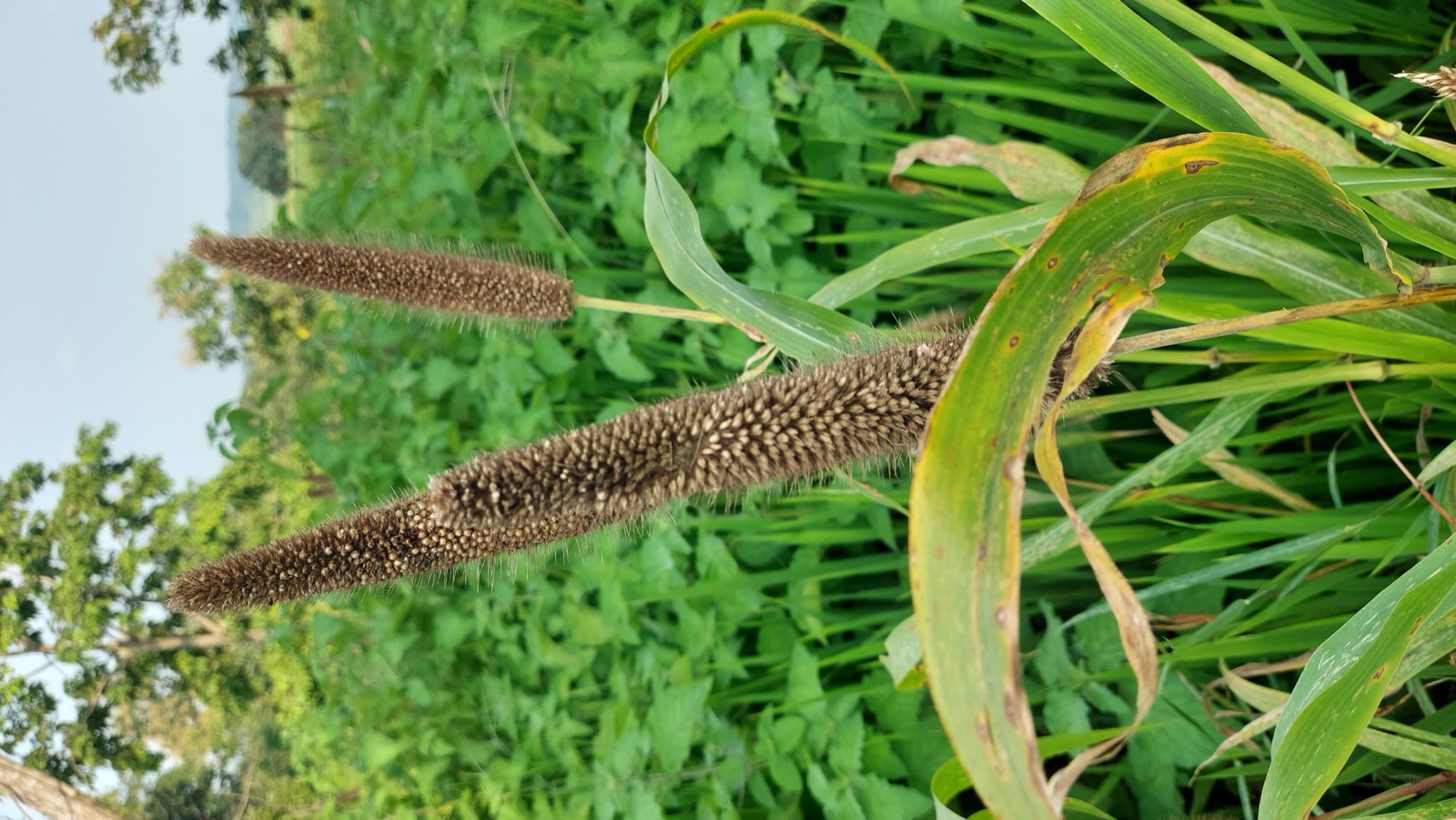
India grew a record 180.15 lakh tonnes of millets in 2024-25 and shipped almost none of it abroad. Millets export from India came to just 1.21 lakh tonnes worth $59.23 million that year — under 0.7% of the crop left the country (APEDA). The nation that grows 42.75% of the world's millets exports a rounding error of them, into a global millet trade that hit a record $4.3 billion in 2022 (India Exim Bank).
That gap is the whole story. Bajra, jowar and ragi grow by the million tonnes; the buyers who pay a premium for them sit in a few dozen import ledgers in Dubai, Riyadh and New Jersey. The exporters who win aren't chasing volume. They're reading who already buys, at what grade, from whom — then quoting that buyer direct.
The 30-second version
- Millets export from India was 1.21 lakh tonnes worth $59.23 million in FY2024-25 — down from about $75 million in the IYM run-up year FY2022-23 (APEDA, ExportImportData).
- Top buyers by volume: UAE (29,548 MT), Nepal, Saudi Arabia, Senegal, Japan; the USA and Germany buy the value-added grades (ExportImportData).
- Bajra (pearl millet) is ~65% of India's output and the bulk export; jowar ~23%, ragi ~9%, small millets ~2% (India Exim Bank).
- Millet for consumption ships under HS 1008 29 (bajra 1008 29 20, ragi 1008 29 30); grain sorghum sits in its own heading, HS 1007 (ClearTax).
- The margin isn't in raw grain. Feed-grade bajra fetches $180–230/tonne; sprouted ragi flour fetches $700–950 (Tradologie).
What do the latest millets export from India numbers show?
India exported 1.21 lakh tonnes of millets worth $59.23 million in FY2024-25, off a record 180.15 lakh-tonne crop — meaning exports fell even as production rose (APEDA). Value has actually eased since the hype peak: in FY2022-23, the run-up to the UN International Year of Millets, India shipped 169,049 MT worth about $75 million (Rs 608 crore) (ExportImportData).
Read that honestly and it reframes the opportunity. India is the world's largest millet producer and its largest consumer — roughly 18.7% of global consumption on the USDA basis that lumps in sorghum — so most of the crop is eaten at home, not sold abroad (India Exim Bank). The export line is small, lumpy and under-developed. For an exporter, small and under-developed is the point: $59 million against a $4.3 billion world trade is not a mature market you're late to. It's an open one.
Which countries buy the most Indian millets?
The United Arab Emirates is the top buyer of Indian millets — 29,548 tonnes in FY2023-24 — followed by Nepal, Saudi Arabia, Senegal and Japan (ExportImportData). The lane ranking by volume:
- United Arab Emirates: 29,548 MT — bajra and ragi for grocery retail and re-export
- Nepal: 16,866 MT — jowar and bajra as food staples across the open border
- Saudi Arabia: 16,646 MT — bajra, much of it bulk animal feed
- Senegal: 10,533 MT — pearl millet into a traditional West-African staple market
- Japan: 5,370 MT — small millets and ragi for the health-food shelf
Behind those five lanes sit the higher-value ones: the United States and Germany pull ragi, jowar and small millets for gluten-free and organic processing (APEDA). Between March 2023 and February 2024 India moved 11,723 millet cargoes — up 21% year on year — through 773 exporters to 1,625 overseas buyers (ExportImportData). That's a buyer list you can read name by name.
The Gulf feed trader doesn't watch Indian harvests. He watches the buyer's weather — a bad forage year in Saudi Arabia lifts his volume, a drought in Rajasthan only lifts his price.
Bajra, jowar or ragi: which millets does India export?
Different millets, different businesses. Bajra (pearl millet) is about 65% of India's millet production and the workhorse export — cheap, high-volume, split between Gulf feed mills and African food markets. Jowar (sorghum) is ~23% of output, ragi (finger millet) ~9%, and the small millets — foxtail, kodo, little millet, barnyard — the remaining ~2% (India Exim Bank).
The value inverts the volume. Bajra moves in the largest tonnage and earns the least per kilo. Ragi and the small millets ship in small quantities but command the premium, because that's what the US and EU health-food buyers actually want — gluten-free, high-fibre, single-origin. A bajra/ragi/jowar export strategy that treats all three as one commodity leaves the ragi margin on the table. The exporters growing fastest picked one millet, one grade, one buyer type — and went deep.
Millet HS codes: heading 1008, and where jowar sits
Millets fall under HS heading 1008 — "buckwheat, millet and canary seed; other cereals." The code that carries almost all of India's edible-millet exports is HS 1008 29 (millet, other than seed); seed-grade lots move under 1008 21. India's 8-digit schedule then splits the grain by crop:
- Bajra / pearl millet: 1008 29 20 (grain), 1008 21 20 (seed)
- Ragi / finger millet: 1008 29 30 (grain), 1008 21 30 (seed)
- Jowar / jawar: 1008 29 10, but grain sorghum proper is also logged under its own heading HS 1007 (1007 90) — so jowar can appear under either, and a code-only pull misses half of it (ClearTax).
That jowar overlap trips up first-time analysts. When you pull millet export data, query 1008 29, 1008 21 and 1007 90 together or your sorghum numbers come in a third short. New to the system? Start with what an HS code is and how to use it.
Raw grain vs value-added: where the millet export margin lives
The single most useful table in the millet trade is the price ladder from feed to finished product. Current FOB India bands:
| Millet / grade | FOB India, 2026 ($/tonne) |
|---|---|
| Bajra, feed grade | $180–230 |
| Bajra, food grade | $310–400 |
| Jowar (sorghum), bulk | $200–260 |
| Ragi, whole grain | $420–560 |
| Small millets (foxtail, kodo, little) | $500–850 |
| Ragi, sprouted flour | $700–950 |
Read top to bottom, that's a 5x price swing on the same plant. Moving one container from feed-grade bajra to sprouted ragi flour adds roughly $700 per tonne of headroom (Tradologie). Branded processed-millet lines — flours, flakes, ready-to-eat mixes — already reach the UAE and Singapore, and India opened its first sea shipment lane for millets to New Zealand in 2024 (Asianet). The processed-millet exporters who make money don't sell "millet." They sell gluten-free ragi flour to a US private-label brand that already imports quinoa and chia — and they found that brand in its own shipment history.
Every importer who bought quinoa or chia last year is a warm lead for ragi flour. The record already tells you who they are and how often they reorder.
Shree Anna, the IYM legacy and the honest export math
The government rebranded millets as Shree Anna and put real money behind it — APEDA drew ₹80 crore for millet market development in 2025-26, on top of the International Year of Millets 2023 campaign that seeded the demand-side awareness abroad (PIB). Shree Anna export promotion is real, and the buyer curiosity it created in the US and EU is real.
But the FY2024-25 numbers say the curiosity hasn't converted to tonnage yet. That's the exporter's window. The demand-generation was paid for by the state; the supply side is still fragmented and mostly domestic. Whoever industrialises grading, certification and buyer targeting first captures a market the marketing budget already warmed up. For the wider playbook, see finding food & agro buyers with trade data and how to find buyers for export from India.
How ShipScout turns millets export from India data into buyers
ShipScout is a global trade-intelligence platform — 11 billion-plus shipment records across 240+ countries, built as an affordable alternative to Panjiva and ImportGenius. It helps millet exporters find and vet buyers with data-backed targeting, working from mirrored licensed trade data for India-linked lanes and from legally public customs data for markets like the US and EU. The millet workflow:
- Search by grade, not just grain. Query HS 1008 29 for bajra and ragi, add 1007 90 for sorghum, and see which importers in the UAE and the US are receiving which grade right now. Start in the company directory.
- Rank by reorder cadence. A Dubai grocery importer clearing bajra monthly beats a one-off feed tender — sort buyers by frequency and recency, not headline size.
- Target the value-added buyers. Filter US and EU importers already pulling quinoa, chia or gluten-free flours — they're the warm leads for ragi and small-millet lines, where the $700+ margin lives.
- Vet before you ship. Check a buyer's real import history before extending terms — here's how to verify a trade partner before paying.
One habit converts: open with the buyer's own pattern. "You've cleared four containers of pearl millet from Gujarat since January" changes the reply rate, because it tells the importer you can see how they buy. India is the biggest millet producer on earth and one of the smallest exporters — that spread is the opportunity, and the buyer list is already written. Start a free trial and search HS 1008 to read it.
See who’s importing millet buyers right now.
ShipScout turns 11B+ shipment records across 240+ countries into a live list of verified buyers and suppliers — ranked by volume, with the contacts to reach them. Create a free account and run your first search in minutes.
Start your free trial →