France bought €698.9 billion of goods from the rest of the world in 2024 — around $760 billion — and the bill actually shrank 4.5% as energy prices cooled, per the French customs service (Douanes). Even after that dip, imports outran exports by €83 billion. That deficit is the whole opportunity: behind every euro of it sits a French buyer already sourcing from abroad. This guide breaks down France import data for 2026 — what France buys, who supplies it, how Le Havre and Marseille-Fos move the cargo, the EU customs quirk that hides consignee names, and how to turn shipment records into a ranked list of French importers.
The 30-second version
- France imported €698.9 billion of goods in 2024 (about $760 billion), down 4.5% on cheaper energy, leaving a goods deficit of €83 billion — narrower than 2023's €100 billion.
- Germany is France's biggest supplier at $98.7 billion, then China $84.3B, the US $63.2B, Italy $62.0B and Spain $51.8B.
- Mineral fuels (HS 27) top the shopping list at $95.7 billion, ahead of machinery (HS 84) and vehicles (HS 87).
- HAROPA PORT (Le Havre) handled 3.1 million TEU in 2024, up 19%; Marseille-Fos moved 70.5 million tonnes, France's biggest port by weight.
- India's exports to France reached $7.96 billion in FY2024-25 — France is India's third-largest trade partner in the EU.
What does France import the most?
Energy still leads. Mineral fuels and oils (HS 27) were France's single biggest import chapter at $95.7 billion in 2024, just ahead of machinery and nuclear reactors (HS 84) at $90.4 billion and vehicles (HS 87) at $80.3 billion. Electrical equipment and pharmaceuticals fill out the top five.
| Category | 2024 imports ($B) | HS chapter |
|---|---|---|
| Mineral fuels and oils | 95.7 | 27 |
| Machinery and nuclear reactors | 90.4 | 84 |
| Vehicles | 80.3 | 87 |
| Electrical and electronic equipment | 67.1 | 85 |
| Pharmaceuticals | 33.1 | 30 |
That energy line explains why the 2024 import bill fell at all: mineral-fuel imports dropped 17.9% as post-2022 prices normalised, and the decline swamped a rise in aerospace buying. For anyone selling into France, the read is simple — this is a manufacturing and consumer economy that imports components, cars, medicines and machines at scale. New to chapter codes? Start with how HS codes work before you filter any France trade data.
What France import data reveals about its top suppliers
Germany, by a distance. On the latest UN COMTRADE figures, France sourced $98.7 billion of imports from Germany, then $84.3 billion from China, $63.2 billion from the United States, $62.0 billion from Italy and $51.8 billion from Spain. Belgium ($51.3B) and the Netherlands ($34.3B) follow, both padded by re-exports that pass through Antwerp and Rotterdam before the goods ever touch French soil.
The pattern is EU-heavy: France's neighbours supply the bulk of what it buys, and China is the largest supplier from outside the bloc. That matters for an exporter in India, Vietnam or Turkey, because most of the competition on a French buyer's dock is intra-EU and duty-free. Winning share is less about undercutting Germany on price and more about proving to a French importer that you already move the exact product they buy — which is where shipment records earn their keep.
Where does France import data come from?
Two official layers, both aggregate. French customs (Douanes) publishes monthly goods trade by product and partner country, and Eurostat republishes the same flows across the EU. Both are free, reliable and completely anonymous — and neither one names the company that took delivery.
That is the catch that trips up first-timers. The United States releases bill-of-lading manifests with consignee names; the EU does not. No official French source will tell you which distributor imported industrial pumps into Lyon last quarter. Practitioners close the gap with mirror data — partner-country export records that show shipments moving into France with product, value, volume and, where disclosure rules allow, the French consignee. The method is the same one covered in finding buyers with customs data, and a quick primer on how to read a bill of lading covers the fields you will rank on.
Le Havre and Marseille-Fos: reading France's port data
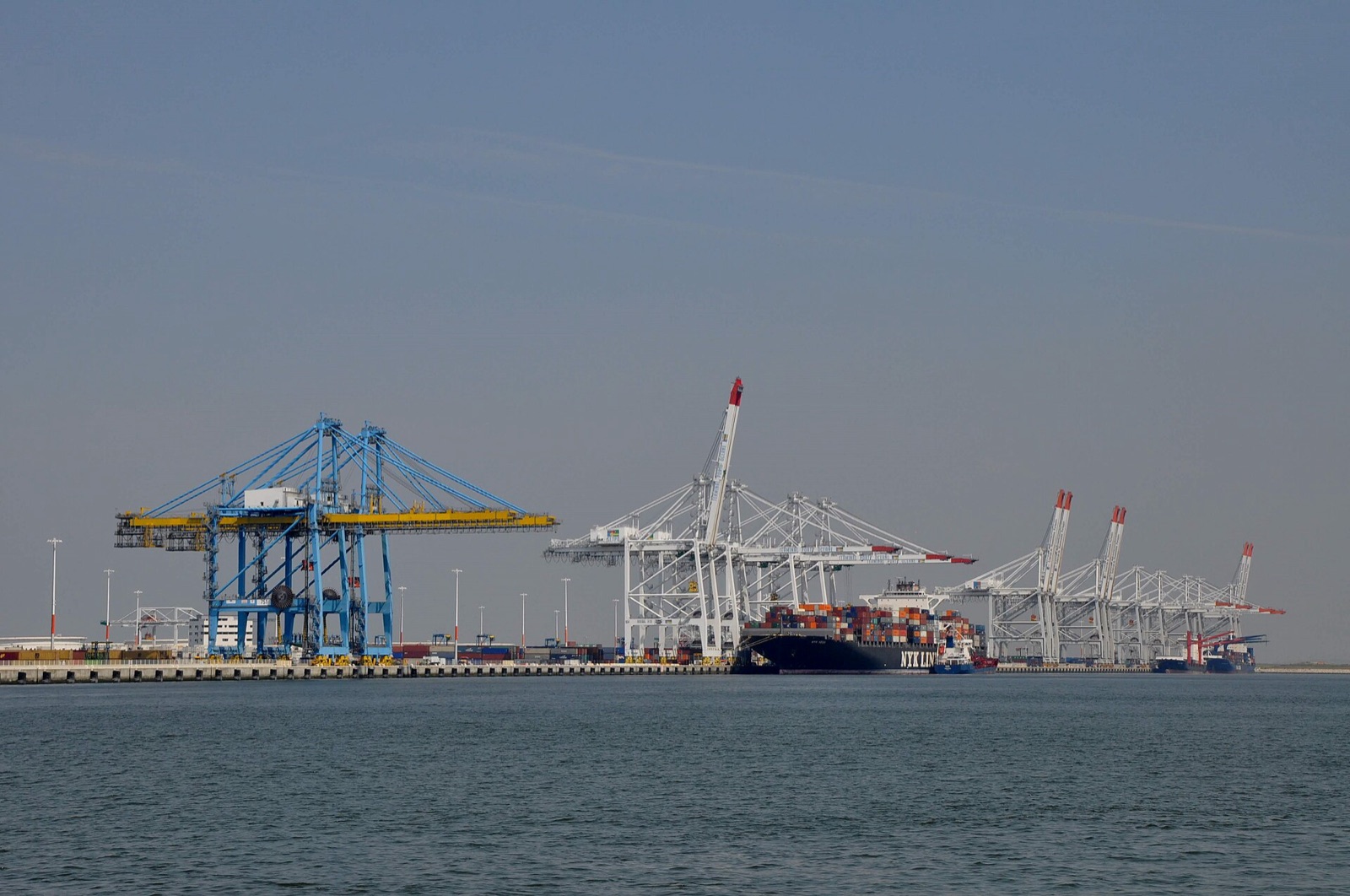
France runs two very different gateways. On the Channel, HAROPA PORT — the combined Le Havre, Rouen and Paris group — handled 3.1 million TEU of containers in 2024, a 19% jump on the year and a sharp recovery from 2.63 million TEU in 2023. Le Havre is France's deepsea box gateway, and it is spending to stay one: seven of the world's largest ship-to-shore gantry cranes went into its Port 2000 terminals through 2025, and containerised rail traffic hit a record over the same stretch.
On the Mediterranean, Marseille-Fos is the tonnage leader. It moved 70.5 million tonnes of total cargo in 2024 and 1.45 million TEU of containers, up 9%, though roughly 70% of those boxes are transshipment rather than French-destined. Read side by side, the two ports tell you where a French importer's cargo is likely to land: consumer and manufactured goods from Asia through Le Havre, energy and Mediterranean-basin trade through Fos.
Every one of those 3.1 million boxes at Le Havre has a consignee behind it. Official France import data gives you the tonnage; mirror shipment records give you the name on the door.
The India–France trade lane
India exported $7.96 billion of goods to France in FY2024-25, which makes France India's third-largest trade partner in the EU, behind the Netherlands and Germany. The lane leans on electrical and mechanical machinery, pharmaceuticals, organic chemicals and gems and jewellery — the same high-value categories France buys most of. With the India–EU free-trade agreement pushed toward conclusion, tariff room on several of those lines is set to widen.
For an Indian exporter, France is a serious, high-margin market that rewards targeting over spray-and-pray. The move is to build a shortlist of French importers whose recorded volumes match your capacity, then approach them with their own numbers. Data-backed targeting like this is how exporters grow into Europe without a Paris office or a trade-fair budget.
How to find buyers in France with import data
Since no EU register names consignees, you work from mirror shipment records and rank from there. The sequence that holds up:
- Fix the HS code first. French and EU buyers filter on 6-digit headings plus CN subheadings; the wrong chapter poisons every later step.
- Pull mirror shipment records. Partner-country export data shows shipments into France with product, value, volume and, where available, the French importer.
- Rank by consistency, not one big spike. A dozen shipments a year marks a working distributor; a single large arrival is often a one-off project buy.
- Watch for the re-export tell. A French consignee whose volumes dwarf domestic demand may be feeding the wider EU — bigger prize, longer qualification, CE and REACH paperwork from day one.
- Verify before you quote. Cross-check trade history and registry records, then open with the buyer's own lane. A quick verification pass keeps you off the wrong names.
One exporter shortlisting French buyers skipped the two household-name importers everyone chases and pitched the mid-table consignees ranked fifth to ninth by shipment count. Two replied inside a fortnight. Mid-size importers still answer their own email.
How ShipScout helps
ShipScout puts 11B+ shipment records across 240+ countries behind one search box, including the France import data trail visible through partner-country records:
- Search your product or HS code with France as the destination and see real flows — values, volumes, origin countries and dates.
- Rank French importers by shipment count and consistency instead of trusting a directory listing.
- Profile before you pitch. Open any company in the importer directory to see trade history, sourcing countries and product mix, with contact intelligence where available.
- Compare the lane against neighbours like the Netherlands, the EU's other big gateway, so you pitch the market that actually fits your volume.
A €698.9 billion import bill funneled through Le Havre and Fos means someone in France is already buying what you make. Start a free trial and pull your first ranked list of French importers today.
See who’s importing goods into France right now.
ShipScout turns 11B+ shipment records across 240+ countries into a live list of verified buyers and suppliers — ranked by volume, with the contacts to reach them. Create a free account and run your first search in minutes.
Start your free trial →