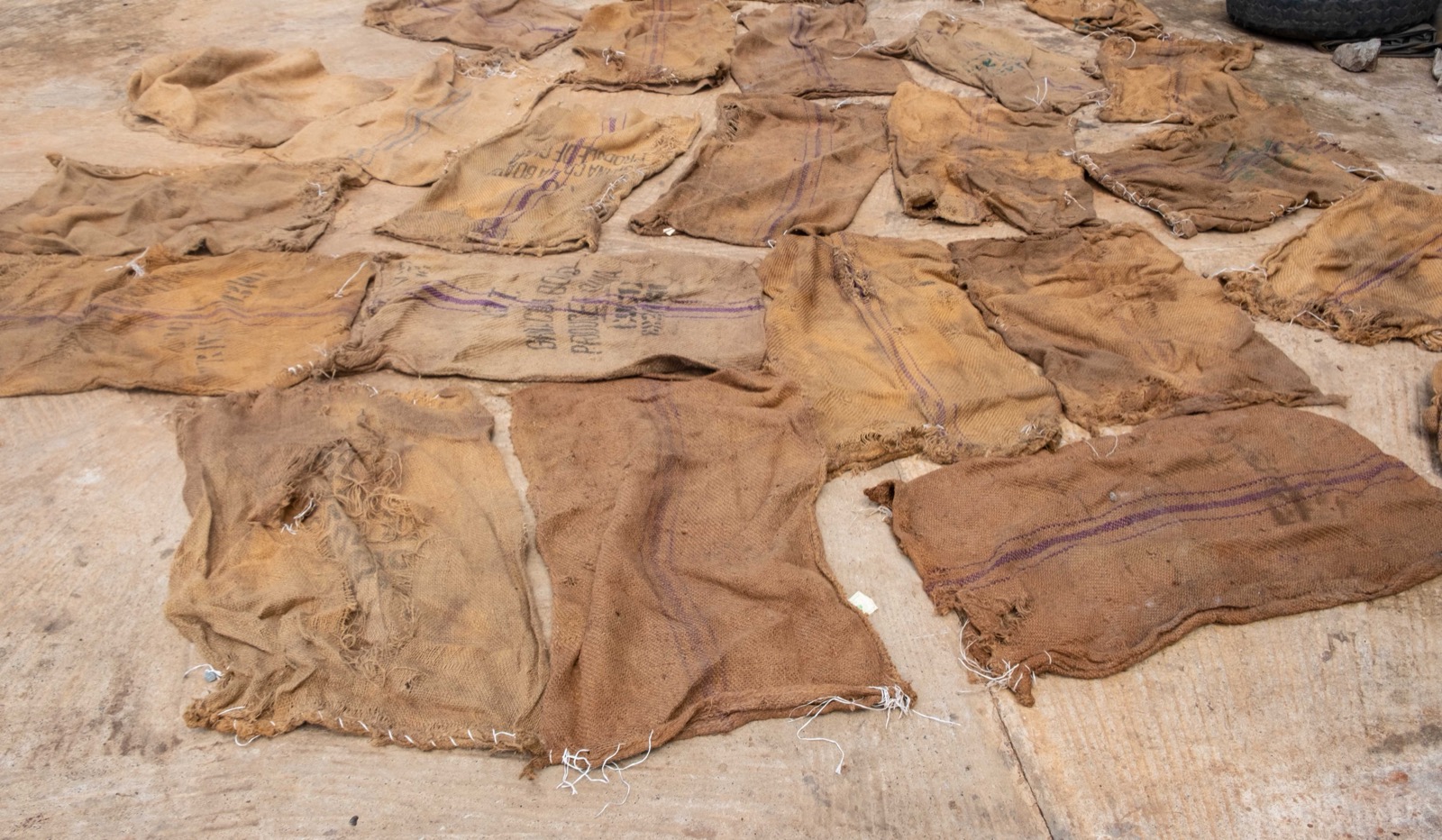
The United States alone bought 23.88% of India's jute goods in FY2024-25 — nearly a quarter of a $229 million export trade (IBEF). Add France at 9.9% and Ghana at 9.17%, and three countries soak up well over 40% of every hessian roll and jute sack the country ships. For anyone tracking jute export from India in 2026, that concentration is the whole story: a short buyer list, a fibre the world is switching back to as plastic bans spread, and a supply chain that just got snarled in an India-Bangladesh trade fight.
India is the world's largest jute producer and processor — roughly 1.97 million tonnes of raw jute a year and about 75% of global jute-goods output (IBEF, Adda247). Almost all of it comes off looms in West Bengal. Here's what the shipment records show about who buys Indian jute, the HS codes to search, the product mix, and why 2026 is a strong year to go hunting for jute buyers with trade data.
The 30-second version
- India's jute-goods exports were $229M in FY2024-25 (up from $204M in FY24); April–July FY26 already hit $79M (IBEF).
- Top buyers FY25: USA 23.88%, France 9.9%, Ghana 9.17%, Germany 5.25%.
- India is the world's largest jute producer (~1.97M tonnes); West Bengal grows 60%+ and its mills employ over 400,000 workers.
- Jute cloth ships under HS 5310 (woven fabrics) and bags under HS 6305; hessian ($103M) and floor coverings ($92M) led FY25.
- The global jute-bag market is heading toward $4.92 billion by 2030 as plastic bans and India's JPM Act lock in demand (Industry Today).
What jute export from India looks like in 2026
The jute export from India picture in 2026 is one of steady recovery on the back of green demand. Jute-goods shipments rose to about $229 million in FY2024-25 from $204 million the year before, and the first four months of FY26 (April–July 2025) already booked $79 million (IBEF). Monthly exports touched roughly $32 million in July 2025 against about $25 million a year earlier — a clear upward step, not a blip.
The base is enormous. India cultivates jute on around 662,000 hectares, runs over 50 million spindles, and consumes about 90% of its own production domestically — which means only a slice reaches the export market, and that slice is where the margin lives (IBEF). One thing a Kolkata mill owner will tell you: the export order pays for the mill, the government foodgrain-bag order keeps the lights on. Both matter, but only one is chased with trade data.
Which countries buy the most Indian jute?
The United States is the single biggest buyer of Indian jute, taking 23.88% of jute-goods exports in FY2024-25, followed by France (9.9%), Ghana (9.17%) and Germany (5.25%). The rest of the buyer set — UK, Netherlands, Ivory Coast, UAE, Australia and Spain — splits the balance.
Top destinations for jute export from India, FY25 by share:
- USA — 23.88% (about $75.6 million in FY24)
- France — 9.9%
- Ghana — 9.17%
- Germany — 5.25%
Two patterns are worth reading past the headline. Ghana and Ivory Coast sit high because West African cocoa and cashew shippers still bag their crop in jute — a durable, humble demand lane most exporters overlook. And the Western buyers (USA, France, Germany, UK, Australia) increasingly want jute bags and lifestyle goods, not bulk sacking, because retail plastic bans push them toward biodegradable carriers. Different products, different buyers — read them separately.
A jute exporter doesn't chase the whole planet. Win one more American retail-bag account and you've moved the needle further than ten scattered small orders across five continents.
Which HS codes cover jute exports? 5310, 6305 and 5303
Search the wrong code and the shipment data returns the wrong product. Jute splits across a handful of headings, and the two that matter most for finished-goods exporters are 5310 and 6305:
| HS code | What it covers |
|---|---|
| 5310 | Woven fabrics of jute — hessian (burlap) cloth and sacking cloth (HSN 5310) |
| 6305 | Sacks & bags for packing goods; 63051030 = jute hessian bags, 63051040 = jute sacking bags (HSN 6305) |
| 5303 | Raw jute and jute fibre, unspun |
| 5307 | Jute yarn |
| 5702 | Jute floor coverings, mats and woven carpets |
Domestically most jute bags carry an 18% GST rate (Busy). New to code-based searching? Start with how HS codes work — getting the heading right is the difference between a clean buyer list and noise.
What jute products does India actually export?
Jute is not one product. The FY25 export basket breaks down cleanly, and the shape tells you where the buyers are:
| Product | FY25 exports | Apr–Jul FY26 |
|---|---|---|
| Jute hessian (burlap cloth & bags) | $103M | $38M |
| Floor coverings (mats, rugs, carpets) | $92M | $27M |
| Jute yarn | $18M | $9M |
| Raw jute | $16M | $4M |
Source: IBEF. Hessian and floor coverings together are the whole game — roughly $195 million of the FY25 total. Hessian is the workhorse: the woven cloth that becomes sacking bags, geotextiles for soil erosion, and the raw material for the fast-growing jute bags export india segment. Floor coverings — the woven rugs and door mats shipped mostly to the US and EU home-goods trade — carry a far better price per kilo than plain sacking, which is why the smarter mills are tilting that way.
Why is demand for jute bags rising?
Plastic bans are the engine. As governments across the UK, EU, Australia, UAE and US states restrict single-use plastic, retailers and packers need a biodegradable carrier — and jute, unlike cotton, is cheap, strong and compostable. The global jute-bags market is forecast to reach nearly $4.92 billion by 2030 (Industry Today). That is the tailwind behind every Indian jute exporter's order book right now.
At home, demand has a legal floor. The Jute Packaging Materials Act reserves 100% of foodgrain and 20% of sugar packaging for jute, and the 2025 notification kept both intact — guaranteeing mills a domestic base while they chase export growth on top. For a buyer overseas, that stability matters: it means Indian jute capacity isn't going anywhere. The practitioner move in 2026 is to lead sales conversations with the sustainability story, then close on price — Western procurement teams are actively looking for plastic replacements and will pay for a documented, natural-fibre supply chain.
The Bangladesh factor: what the 2025 trade dispute changed
Jute is a two-country business. India is the largest producer, but Bangladesh is the world's largest exporter of raw jute fibre, supplying around 70% of globally traded jute fibre (Adda247). Indian mills lean on Bangladeshi fibre when the domestic crop is short — and in 2025 that dependency turned into a headache.
In April 2025, India's DGFT restricted imports of Bangladeshi jute goods — woven fabrics, twine, rope and sacks — to a single seaport, Nhava Sheva, blocking the cheap land routes and raising landed costs (The Federal). Dhaka retaliated on 8 September 2025, putting raw-jute shipments under conditional approval. The result: West Bengal's raw-jute stock fell below 4 lakh bales — six to eight weeks' cover — and raw-jute prices nearly doubled from about ₹60,000 to ₹1,10,000 per tonne between July and December 2025 (The Federal).
When Dhaka sneezes, a Hooghly mill catches cold. The exporters still shipping through the squeeze are the ones who mapped their own overseas buyers — not just their fibre supplier.
For an exporter, the lesson is blunt: input costs swing on politics you don't control, so the one thing you can control — a diversified, documented buyer pipeline — is worth building before the next shock, not after.
How to find buyers for jute export from India
ShipScout is a global trade-intelligence platform — 11 billion-plus shipment records across 240+ countries, built as an affordable alternative to Panjiva and ImportGenius. For India-linked trade it works from mirrored licensed trade data, helping exporters find overseas buyers with data-backed targeting; public customs and bill-of-lading records for the US, EU and other markets are searchable directly. The jute workflow:
- Search HS 5310 and 6305. See which importers abroad received jute cloth and jute bags last month, in what volume and how often. Start in the company directory.
- Go where the buyers already are. Pull the US importer list first — it's a quarter of the market — then work Germany, France and the UK for the retail-bag and floor-covering trade.
- Rank buyers by cadence, not size. A home-goods importer clearing a container of jute rugs every fortnight beats a giant that tenders once a year. Selling into the US? Pair this with our guide on how to export to the USA from India.
- Vet before you ship. Check a counterparty's real shipment history first — here's how to verify an overseas partner before you're paid, and the full playbook in finding buyers for export from India.
Demand is climbing, the JPM Act underwrites the base, and the buyer list already sits inside the shipment records. Jute products export is one of the few Indian trade stories where the macro tailwind and the data both point the same way. Start a free trial and search HS 6305 to read it.
See who’s importing jute buyers right now.
ShipScout turns 11B+ shipment records across 240+ countries into a live list of verified buyers and suppliers — ranked by volume, with the contacts to reach them. Create a free account and run your first search in minutes.
Start your free trial →